
November 1, 2025
Results of our August food drive: The Catt Wealth Consulting Community collected 225 pounds of food for Second Harvest of Metrolina at the August Shred Event. Catt Wealth Consulting matched the poundage with a cash donation of $225 to Second Harvest, so they could add fresh produce to the food pantry.
We made an additional $225 donation to World Central Kitchen, an organization that provides hot, nutritious meals in war and disaster zones all over the world. WCK was one of the first on the scene after Hurricane Helene.
We also donated $25 in honor of each of those clients living outside the greater Charlotte area, who could not attend the Shred Event. The total cash donation was $450 to both Second Harvest of Metrolina and World Central Kitchen.
Altogether, the Shred Event cash donations for food relief totaled $1,350, but that is not enough. Congress set aside an emergency fund for the Supplemental Nutrition Assistance Program (SNAP) in the event of a government shutdown like now, but the Trump administration has refused to release the funds. So, food banks are challenged. You will soon receive an invitation to a Holiday cookie event where we will be conducting another food drive with the matching dollars. Thank you for what you have done so far, and for what may yet come.
You can drop off non-perishable food items now until December 18th.
The Harvest of 1918
“I call them the golden days, not that they were easy, far from it, but that is the color I remember most. We milked the cows in pools of golden lantern light before dawn and again in the evenings. We read or wrote letters in the evening by glowing lamplight. Electricity is a wonderful thing, but it makes it easy to forget the natural rhythm of a day. We worked from the peach-gold sunrise to the red-gold sunset and in-between was the yellow wheat and corn.”
My maternal grandmother, Bertha Baxter, recalling her first years of marriage in Nauvoo, Illinois.
⸻
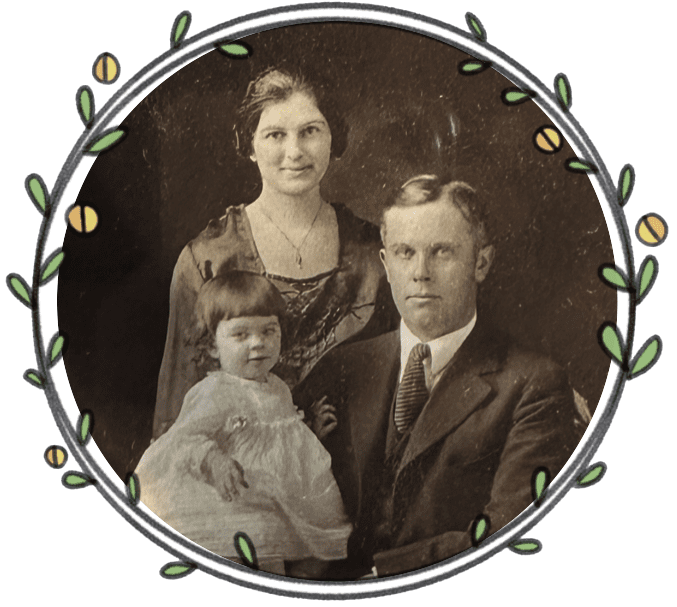
The other day I opened a hidden panel of an old jewelry box and discovered a gold bracelet given to me as a child commemorating a 50th wedding anniversary, the golden anniversary. My grandparents Harry and Bertha Baxter were married in August of 1917, immediately before Harry shipped out to France. The U.S. had entered World War I three years after Archduke Ferdinand’s assassination sparked the conflict, so my grandfather had no illusions that this was going to be a cakewalk.
As a young teen, discovering the artifacts of that time in grandma’s attic, my grandfather’s woolen uniform hung on a peg as if he had just taken it off, his helmet suspended from the chin strap full of letters bundled with twine, my grandmother’s dainty dancing shoes carefully wrapped in tissue still waiting for another waltz, caused me to broach the subject with her. How did she survive that deeply dark time when the world was seething, not only from a World War, but from the so-called Spanish Flu of 1918 which killed more people than the war itself?
“Nowhere in the world was safe. There was no refuge anywhere.”
She smiled at my naivete. “When you find yourself in a pickle, that’s when you need to count your blessings even more carefully. Your troubles are all around you, so you’ve got to line up all your blessings like a fortification against despair. For me that started when I learned your grandfather would be driving an ambulance. Any baboon can be taught to drive nowadays, but those old vehicles were fractious contraptions. Keeping those early machines running and getting them started when they conked out was more difficult than dealing with a temperamental horse.”
The harvest of 1918 presented new challenges. We’ve all heard the phrase: Make hay while the sun shines. Well, that phrase came from this time. Harvests were always a race against the elements. Wheat needed to be ripe, but dry. Rain could beat down the stalks and damp grain was unsuitable for the silo. Wheat is usually harvested in midsummer, so the days were long. Then came the peaches in August and grapes in September, which all had to be carefully picked by hand. The Baxters made wine with the grapes, and the peaches might find their way into brandy, jam, or canning jars.
Corn might not be ready until October. Wrestling it off the stalks was exhausting. “I was only twenty-five and my arms were sore for a week!” Grandma confided.
With the most able-bodied young men off in France and many others taken by the Great Influenza, every remaining member of the community played a role. Older men and young boys worked the reaper and thresher while the women cared for the cows and chickens and kept the little band of harvesters fed.
The Baxters had pooled their money to buy a tractor to pull a reaper and thresher. It cut the wheat and separated the wheat kernels from the chaff. When the crops were ready, they moved the machine from farm to farm as quickly as they could.
“Before sun-up, we carried a lantern to the milking shed and milked the cows. Those were the days before rural electrification, no milking machines, just your hands, a three-legged stool, and a bucket. One of us would process the milk while another fed the chickens, counted them, and collected the eggs.
“The men were in the fields at the first streak of dawn with only a bowl of porridge in their bellies, so you can imagine how powerful hungry they were by noon. They needed food and rest by that time anyway. They couldn’t work while the sun was directly above. It would just cook them.
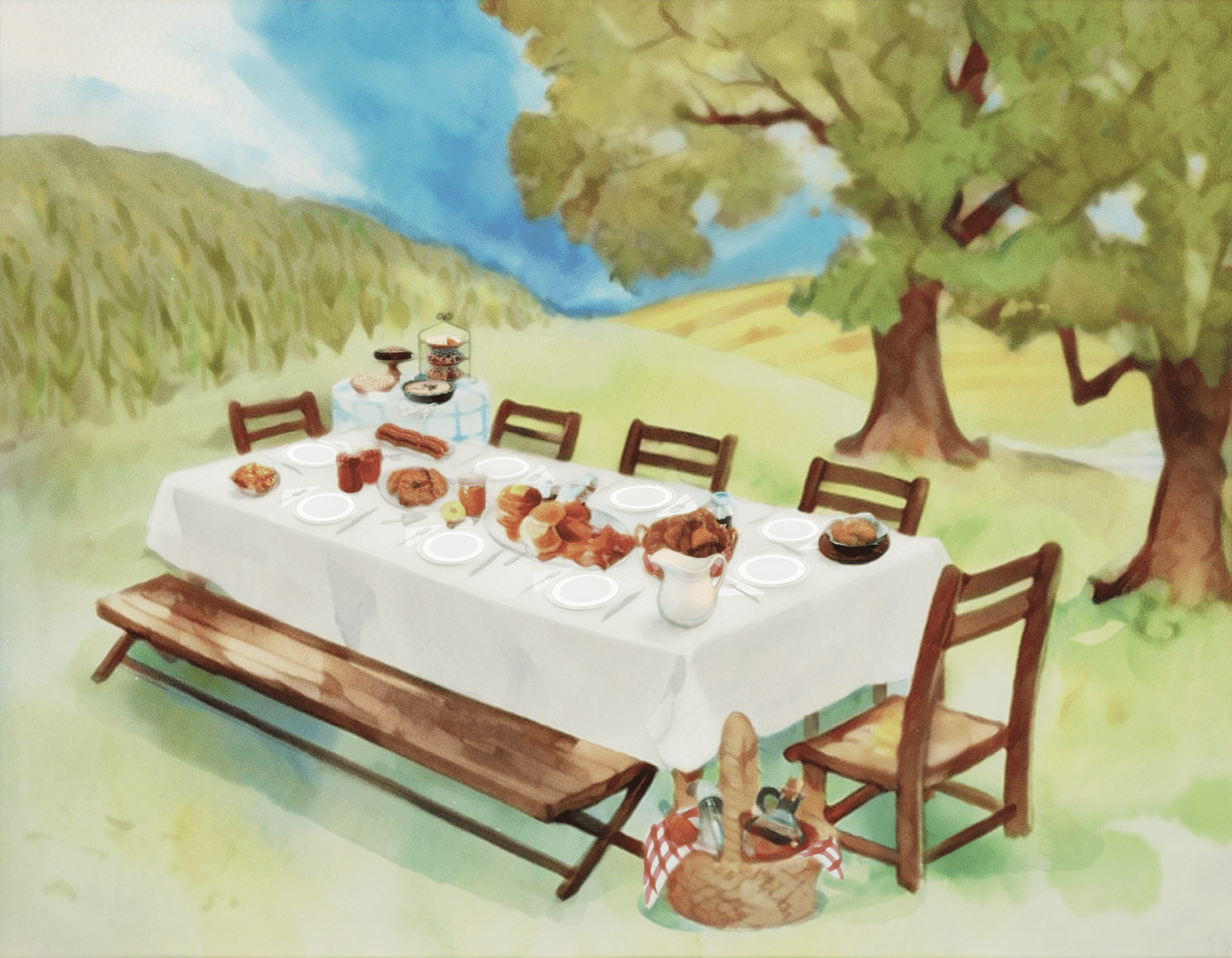
“So, the women would gather in the kitchen of whoever’s farm was being harvested that day and prepare the harvest breakfast: Pancakes, pork chops, fried chicken, hash browns, bacon, ham, biscuits, sausage, gravy, applesauce, canned peaches, berry preserves, and pies all laid out on long, linen covered tables under the shade trees. It was Thanksgiving every harvest day. We gave thanks knowing the grain we harvested would feed many more than our own little community. We were doing our part. I think everybody wanted to do their part back then.”
“So, your refuge wasn’t a place. It was the work?” I asked.
“It was working together,” she emphasized. “Nature is a taskmaster. Nothing focuses your attention more keenly than the risk of losing a crop because you cannot get it in. We all understood that imperative. Those may have been dark days for the world, but with each successful harvest, we felt a victory. Each day we lived another day without falling ill was an accomplishment. With each little bit of progress, the world looked a little brighter. Eventually, collectively, we banished the darkness.”
In today’s splintered world of social media, it is hard to remember a time when news came on a broadsheet or in a letter delivered by hand. We do so much in isolation that we forget how we are all connected. We forget that we are in these times together, and that we can help each other in all kinds of ways.
During this season of harvest and celebration, I am grateful to have a community with which to share a common purpose as we support each other through all of life’s challenges. I consider each of you a blessing.
I may not have a farm in the sense that grandma and grandpa did. I am not raising a cash crop but tending a type of farm that raises a crop of cash. Thank you for the purpose.
May your harvest season and holidays be bountiful and peaceful. Please call me if you need me. I am here for you.
Yours as Always,
Martha
Harvest, 1918: Original digital illustration by Paul Starrett
Securities and Advisory Services offered through LPL Financial, a registered investment advisor. Member FINRA/SIPC.